
Clinical Reasoning in Spine Pain®
A structured, evidence-based approach to the diagnosis and management of spine-related disorders—developed by Dr. Donald R. Murphy over 30+ years of research and clinical practice.
How CRISP® Began
“Over 30+ years of studying the spine literature, I found that no single treatment was most valuable to patients suffering from spine-related disorders. I concluded that an integrated approach was needed.”
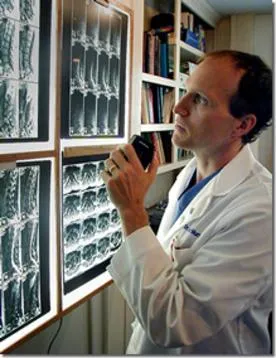
The literature was clear on one point: while a great deal of valuable work had been done in the field of spine care, randomized controlled trials generally showed that each individual diagnostic and treatment approach, when randomly applied to groups of patients without regard for diagnosis or individualization, contributed relatively little to the overall picture.
This led many researchers and clinicians to conclude that nearly every diagnostic and treatment approach was nearly, or completely, worthless. Dr. Murphy decided to see it differently.
The fact that each individual approach contributes a small amount means that a combination of approaches might add up to “contributing a lot.” More importantly, the key to effectiveness is figuring out in each individual patient what combination of approaches is most important for that person’s problem.
Moreover, a focus on “treating pain” was misguided—because what we are “treating” is an individual human being who is suffering due to pain and the resulting distress that comes from disability, fear, and uncertainty.
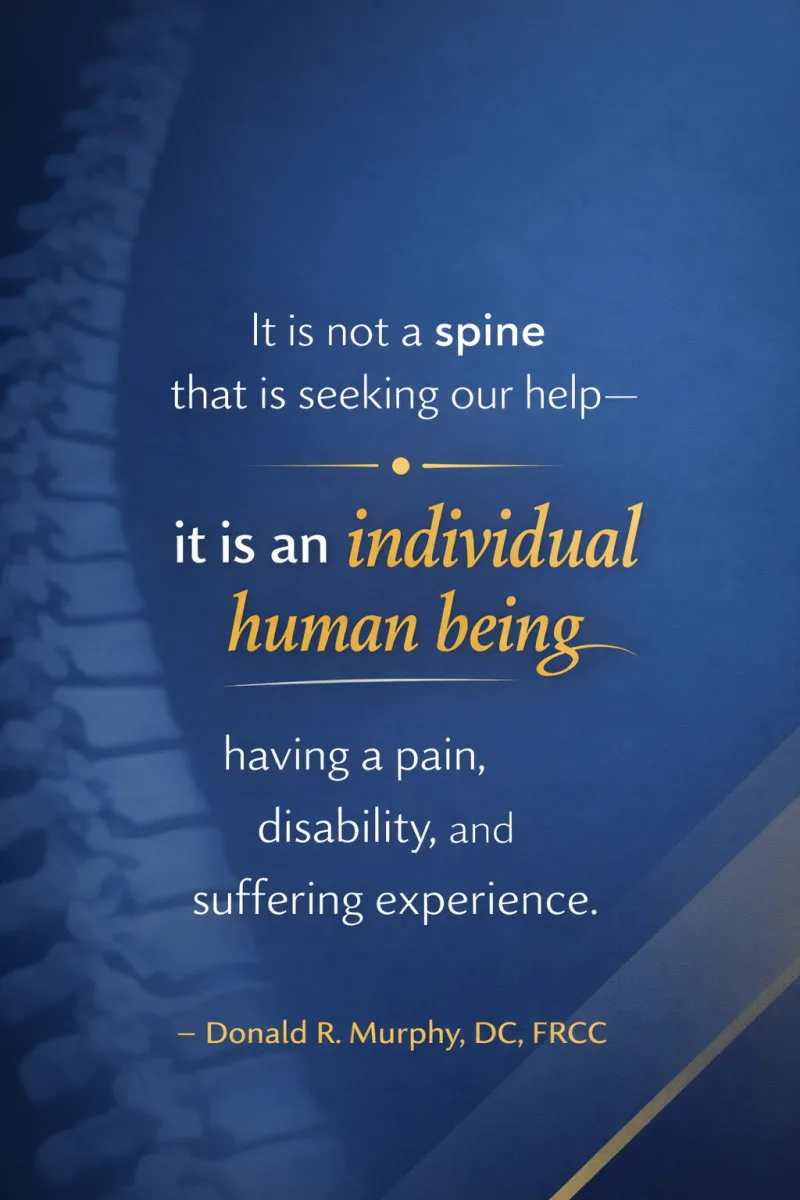
The logical conclusion was that any diagnostic and management approach that is going to be helpful has to involve the recognition of the multifactorial nature of spine-related disorders, a comfort level with “gray areas,” and the understanding that it is not a spine that is seeking our help—it is an individual human being having a pain, disability, and suffering experience.
Through further study of high-quality research, Dr. Murphy discovered that while no single study provided a definitive approach to spine-related disorders, there was a great deal of information that allowed the development of an integrated approach incorporating all of these features. This resulted in the CRISP®CRISP® stands for Clinical Reasoning in Spine Pain®—a structured approach to spine-related decision-making. principles.
Core Principles of CRISP®
Evidence-Based Diagnosis
CRISP®CRISP® stands for Clinical Reasoning in Spine Pain®—a structured approach to spine-related decision-making. provides a means by which the spine practitioner can apply an evidence-based approach to evaluating the patient and arriving at a working diagnosis—identifying the key factors contributing to the patient’s pain, disability, and suffering experience.
Multifactorial Thinking
Spine-related disorders are multifactorial in etiology and mechanism. Each patient experiences a spine-related disorder in his or her own unique way. The biological, psychoemotional, and social factors are inextricably linked—the patient and the disorder must be understood as an integrated whole.
Individualized Treatment
The treatment plan is based on the diagnosis. As with all areas of medicine, management strategies are selected to address the specific contributing factors identified in each individual patient—not randomly applied without regard for individualization.
Communication Context
It is not simply the application of therapeutic techniques that provides benefit. The communication context in which treatment is applied determines the degree to which the patient benefits. Relationship-centered communication is essential to obtaining a good outcome.
Three Essential Questions of Diagnosis
“Is this something serious?”
Do the presenting symptoms reflect a visceral disorder, or a serious or potentially life-threatening condition? This considers traditional “red flag” conditions such as cancer, infection, fracture, and cauda equina syndrome, as well as other medical conditions that can produce pain in the spine—gastrointestinal, genitourinary, and neurological disorders.
“Where is the pain coming from?”
This considers the presence of one or more of the four known clinical entities that can produce pain: discogenic pain, joint dysfunction, radiculopathy, and myofascial trigger points.
“What’s driving the pain experience?”
What is happening with this person as a whole that is driving the pain experience? This considers the known mechanical, neurophysiological, and psychoemotional factors—including impaired motor control, instability, nociplasticity, oculomotor dysfunction, fear, catastrophizing, passive coping, low self-efficacy, depressive symptoms, anxiety, perceived injustice and others.
The Patient as an Integrated Whole
In any given patient, one or more of these factors contributes to the overall clinical picture, and there is often great interaction between the factors. Therefore, in most patients a multimodal approach is required—general approaches applicable to all patients, as well as specific approaches designed to address the individual elements that make up the diagnosis.
While the biological, psychoemotional, and social factors are discussed individually for learning purposes, it is essential for the practitioner to think and act in terms of the patient and the spine-related disorder being an integrated whole.
The real value of CRISP®CRISP® stands for Clinical Reasoning in Spine Pain®—a structured approach to spine-related decision-making. comes in the whole, rather than the sum of its parts. Asking and answering the Three Questions of Diagnosis, and using evidence-based clinical reasoning to determine the most appropriate therapeutic approaches, is what makes up the mechanics of CRISP®. But the most important application is in its context.
Regardless of the diagnosis and the clinical decisions regarding management, it is essential to monitor the results of the approach using formal outcome assessment tools as well as relationship-centered communication. Expertly applied diagnostic and therapeutic methodology is irrelevant if it does not result in an improved quality of life for the patient.
Explore the CRISP® Book Series
The complete CRISP® framework is detailed across two volumes—covering diagnosis, management, and clinical reasoning for spine-related disorders.